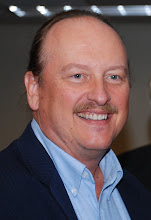
Moments ago, congresswomen Kirsten Gillibrand was sworn in to replace Hillary Clinton as New York’s junior US Senator. Clinton was confirmed as Secretary of State last week, creating the vacancy. New York Governor David Paterson announced his selection of Gillibrand late last week.
Last Thursday, Michael Bennett was sworn in as Colorado’s junior US Senator. He assumed the seat previously occupied by Ken Salazar, who was confirmed as Secretary of the Interior. Colorado Governor Bill Ritter selected Bennett for the post.
This leaves just one slot vacant. The Senate seat representing Minnesota that was formerly held by Norm Coleman remains unoccupied. The state has announced that the result of the statutory recount indicated that Al Franken had won the seat by 225 votes. However, Franken has not assumed the seat due to court challenges levied by the Coleman campaign.
Tuesday, January 27, 2009

Senate Elections in 2010: A Look at the Current Makeup of the State Legislatures
There are many "intangibles" that determine the outcomes of elections.However, a good starting point is to look at pertinent numbers: thenone can try to insert the various other factors and try to determinewhat might happen. Last week, I looked at the Presidential vote in thelast three elections in those states that are having contests for theUS Senate in 2010. Those seats that are occupied by one Party while thestate is voting for (or trending toward) the other Party are goodplaces to look for potentially vulnerable seats.
Today, I'm going to look at the current make up of the StateLegislatures in the 35 states in which there will be US Senate racesnext year. In the table below, I have presented the percentage of eachParty in the State Senates and State Houses of Representatives, andthen the average of these two percentages. As before, the first twocolumns are the state and the Party that currently holds the US Senateseat. There are two rows for New York because there will be two racesnext year because of the special election for the seat recently vacatedby Hillary Clinton and filled by Kirsten Gillibrand.
Based on this criterion alone, there are six Republican seats and twoDemocratic seats that might be vulnerable.
In Iowa and Alabama, the current membership of the State Legislaturesaverage 60% Democratic, while the US Senate seats up in 2010 are heldby Republicans. In Iowa, Chuck Grassley's seat is up, and at thispoint, it appears that he will run for re-election. In Alabama, thesame holds for Richard Shelby.
The next two Republicans holding seats with Democratic majorities inthe State Legislature are Richard Burr in North Carolina and Judd Greggin New Hampshire. The two states have an average of 58% and 57%Democratic members in their State Capitals, respectively.
In all four of those mentioned above, the Democratic Party holds amajority in both houses of the State Legislatures. There are two otherUS Senators holding seats in states that have, on average, Democraticmajorities, although the Party holds an outright majority in only oneof the houses. These are David Vitter in Louisiana and Jim Bunning inKentucky.
There are only two Democratic members of the US Senate whose seats areup next year and who are holding office in states where theRepublican Party currently has the advantage in the State Legislatures.Byron Dorgan in North Dakota is a Democrat although his Party holdsonly an average of 42% of the legislative seats, and his Party is inthe minority in both houses. The other is Indiana's Evan Bayh: theDemocratic Party holds only an average of 43% of the seats in thestate's legislature, although they do hold a majority in the StateHouse of Representatives.
So, now we have examined recent voting in recent Presidential and StateLegislature elections, looking for potentially vulnerable seats. Theconsistent indicators seem to suggest that the seats in Iowa, NorthCarolina, New Hampshire, North Dakota and Indiana warrant considerationas potential pickups by one Political Party or the other.
Today, I'm going to look at the current make up of the StateLegislatures in the 35 states in which there will be US Senate racesnext year. In the table below, I have presented the percentage of eachParty in the State Senates and State Houses of Representatives, andthen the average of these two percentages. As before, the first twocolumns are the state and the Party that currently holds the US Senateseat. There are two rows for New York because there will be two racesnext year because of the special election for the seat recently vacatedby Hillary Clinton and filled by Kirsten Gillibrand.
| State | State Senate | State House | Avg | |
| AK | R | 50% | 45% | 48% |
| AL | R | 60% | 59% | 60% |
| AR | D | 77% | 71% | 74% |
| AZ | R | 40% | 42% | 41% |
| CA | D | 65% | 64% | 64% |
| CO | D | 60% | 58% | 59% |
| CT | D | 67% | 76% | 71% |
| DE | D | 76% | 61% | 69% |
| FL | R | 35% | 37% | 36% |
| GA | R | 39% | 41% | 40% |
| HI | D | 92% | 88% | 90% |
| IA | R | 64% | 56% | 60% |
| ID | R | 20% | 26% | 23% |
| IL | D | 63% | 59% | 61% |
| IN | D | 34% | 52% | 43% |
| KS | R | 22% | 38% | 30% |
| KY | R | 40% | 65% | 52% |
| LA | R | 56% | 50% | 53% |
| MD | D | 70% | 74% | 72% |
| MO | R | 32% | 45% | 39% |
| NC | R | 60% | 57% | 58% |
| ND | D | 45% | 38% | 42% |
| NH | R | 58% | 56% | 57% |
| NV | D | 57% | 67% | 62% |
| NY | D | 52% | 73% | 62% |
| NY | D | 52% | 73% | 62% |
| OH | R | 36% | 54% | 45% |
| OK | R | 46% | 40% | 43% |
| OR | D | 60% | 60% | 60% |
| PA | R | 40% | 51% | 46% |
| SC | R | 41% | 43% | 42% |
| SD | R | 40% | 34% | 37% |
| UT | D | 28% | 29% | 28% |
| VT | D | 77% | 63% | 70% |
| WA | D | 63% | 65% | 64% |
| WI | D | 54% | 53% | 54% |
Based on this criterion alone, there are six Republican seats and twoDemocratic seats that might be vulnerable.
In Iowa and Alabama, the current membership of the State Legislaturesaverage 60% Democratic, while the US Senate seats up in 2010 are heldby Republicans. In Iowa, Chuck Grassley's seat is up, and at thispoint, it appears that he will run for re-election. In Alabama, thesame holds for Richard Shelby.
The next two Republicans holding seats with Democratic majorities inthe State Legislature are Richard Burr in North Carolina and Judd Greggin New Hampshire. The two states have an average of 58% and 57%Democratic members in their State Capitals, respectively.
In all four of those mentioned above, the Democratic Party holds amajority in both houses of the State Legislatures. There are two otherUS Senators holding seats in states that have, on average, Democraticmajorities, although the Party holds an outright majority in only oneof the houses. These are David Vitter in Louisiana and Jim Bunning inKentucky.
There are only two Democratic members of the US Senate whose seats areup next year and who are holding office in states where theRepublican Party currently has the advantage in the State Legislatures.Byron Dorgan in North Dakota is a Democrat although his Party holdsonly an average of 42% of the legislative seats, and his Party is inthe minority in both houses. The other is Indiana's Evan Bayh: theDemocratic Party holds only an average of 43% of the seats in thestate's legislature, although they do hold a majority in the StateHouse of Representatives.
So, now we have examined recent voting in recent Presidential and StateLegislature elections, looking for potentially vulnerable seats. Theconsistent indicators seem to suggest that the seats in Iowa, NorthCarolina, New Hampshire, North Dakota and Indiana warrant considerationas potential pickups by one Political Party or the other.
Friday, January 23, 2009
Sources Say Gillibrand To Be New York's Senator
Sources close to New York Governor David Patterson say that Kirsten Gillibrand will be his choice to succeed Hillary Clinton in the US Senate. Clinton was confrimed as Secretary of State by a 94-2 vote in the Senate on Wednesday and resigned her Senate seat.
Gillibrand previously served as Special Counsel to the Secretary of Housing and Urban Development during the Clinton Administration. She was elected to the US House of Representatives in 2006 and 2008.
Gillibrand previously served as Special Counsel to the Secretary of Housing and Urban Development during the Clinton Administration. She was elected to the US House of Representatives in 2006 and 2008.
Thursday, January 22, 2009
Caroline Kennedy Withdraws Her Bid For the Senate
Caroline Kennedy has withdrawn her bid to be appointed to replace Hillary Clinton in the US Senate. She informed New York Governor David Patterson of her decision yesterday. The frontrunner now appears to be Attorney General Andrew Cuomo.
Monday, January 19, 2009
The Senate Elections in 2010 – Some Statewide Voting Numbers
Over the past few weeks, I’ve begun to look at the potential candidates in some of the states that are likely to have close Senate races in 2010. Before I continue that process and ultimately come up with my first predictions, I want to take a look at the results of statewide elections in the states that will hold Senate elections next year.
Today, I’ll start with the Democratic Presidential vote percentages for the last three elections. I computed the simple average across these years, then a weighted average (with 3,2,1 weighting going backward) and finally a projection for 2010 based on linear regression of the three years. These are denoted “Avg”, “Wt Avg” and “Trend”, respectively in the table below.
(Note that there are two rows for New York due to the "normal" election for Chuck Schumer's seat and the special election for the one to be vacated by Hillary Clinton. The second column is the Party of the current officeholder: for purposes of this Table, I put a "D" for Bernie Sanders even though he is technically an Independent.)
What can this tells us? Ignoring all of the other factors, this can show us where incumbents of one Party are sitting in seats within states, which are voting for the other Party. In what follows, the states will be following parenthetically by three numbers, referring to the “Avg”, “Wt Avg” and “Trend” numbers from the Table.
Which Democratic seats might be vulnerable? The most notable is Arkansas (43%, 42%, 38%), in which Blanche Lincoln is up for re-election. The second is North Dakota (38%, 40%, 47%) where Byron Dorgan will seek his fourth term. The only other possibility is Indiana (43%, 45%, 50%) – Evan Bayh’s seat.
Now, which seats currently held by Republicans are in states that have been voting Democratic? The three that stand out are New Hampshire (50%, 52%, 56%) where Judd Gregg will be running for re-election, Pennsylvania (52%, 53%, 55%) in which Arlen Specter has said he will seek another term, and Iowa (51%, 52%, 54%) and the seat long held by Chuck Grassley. All three of these seats have all three indicators over 50% meaning preference for Democrats in Presidential races. There are a few other states where at least one indicator is at 50% or all three indicators are very near that mark. For two states, all three indicators are over 48%. These are Ohio (49%, 50%, 52%) and Florida (49%, 49%, 51%), two seats that will be open due to the announced retirements of George Voinovich and Mel Martinez. Then there is North Carolina (46%, 47%, 51%) where Richard Burr will seek a second term and Missouri (47%, 48%, 49%), which will be an open seat due to the retirement of Kit Bond.
Clearly, this is but one set of numbers of interest, and a set that completely ignores incumbency and the past popularity of that incumbent. However, they are numbers to be considered. In the next few days, I’ll look at other statewide vote counts for the two Parties and see what this information is revealed.
Today, I’ll start with the Democratic Presidential vote percentages for the last three elections. I computed the simple average across these years, then a weighted average (with 3,2,1 weighting going backward) and finally a projection for 2010 based on linear regression of the three years. These are denoted “Avg”, “Wt Avg” and “Trend”, respectively in the table below.
| State | 2000 | 2004 | 2008 | Avg | WtAvg | Trend | |
| AK | R | 28% | 36% | 38% | 34% | 36% | 42% |
| AL | R | 42% | 37% | 39% | 39% | 39% | 37% |
| AR | D | 46% | 45% | 39% | 43% | 42% | 38% |
| AZ | R | 45% | 44% | 45% | 45% | 45% | 45% |
| CA | D | 53% | 54% | 61% | 56% | 57% | 62% |
| CO | D | 42% | 47% | 54% | 48% | 50% | 57% |
| CT | D | 56% | 54% | 61% | 57% | 58% | 61% |
| DE | D | 55% | 53% | 62% | 57% | 58% | 62% |
| FL | R | 49% | 47% | 51% | 49% | 49% | 51% |
| GA | R | 43% | 41% | 47% | 44% | 44% | 47% |
| HI | D | 56% | 54% | 72% | 61% | 63% | 73% |
| IA | R | 49% | 49% | 54% | 51% | 52% | 54% |
| ID | R | 28% | 30% | 36% | 31% | 33% | 37% |
| IL | D | 55% | 55% | 62% | 57% | 59% | 63% |
| IN | D | 41% | 39% | 50% | 43% | 45% | 50% |
| KS | R | 37% | 37% | 41% | 38% | 39% | 41% |
| KY | R | 41% | 40% | 41% | 41% | 41% | 41% |
| LA | R | 45% | 42% | 40% | 42% | 42% | 39% |
| MD | D | 56% | 56% | 62% | 58% | 59% | 63% |
| MO | R | 47% | 46% | 49% | 47% | 48% | 49% |
| NC | R | 43% | 44% | 50% | 46% | 47% | 51% |
| ND | D | 33% | 36% | 45% | 38% | 40% | 47% |
| NH | R | 47% | 50% | 54% | 50% | 52% | 56% |
| NV | D | 46% | 48% | 55% | 50% | 51% | 56% |
| NY | D | 60% | 59% | 62% | 60% | 61% | 62% |
| NY | D | 60% | 59% | 62% | 60% | 61% | 62% |
| OH | R | 46% | 49% | 51% | 49% | 50% | 52% |
| OK | R | 38% | 34% | 34% | 35% | 35% | 32% |
| OR | D | 47% | 52% | 57% | 52% | 54% | 60% |
| PA | R | 51% | 51% | 55% | 52% | 53% | 55% |
| SC | R | 41% | 41% | 45% | 42% | 43% | 45% |
| SD | R | 38% | 39% | 45% | 41% | 42% | 46% |
| UT | D | 26% | 26% | 34% | 29% | 30% | 35% |
| VT | D | 51% | 59% | 68% | 59% | 62% | 72% |
| WA | D | 50% | 53% | 58% | 54% | 55% | 60% |
| WI | D | 48% | 50% | 56% | 51% | 53% | 57% |
(Note that there are two rows for New York due to the "normal" election for Chuck Schumer's seat and the special election for the one to be vacated by Hillary Clinton. The second column is the Party of the current officeholder: for purposes of this Table, I put a "D" for Bernie Sanders even though he is technically an Independent.)
What can this tells us? Ignoring all of the other factors, this can show us where incumbents of one Party are sitting in seats within states, which are voting for the other Party. In what follows, the states will be following parenthetically by three numbers, referring to the “Avg”, “Wt Avg” and “Trend” numbers from the Table.
Which Democratic seats might be vulnerable? The most notable is Arkansas (43%, 42%, 38%), in which Blanche Lincoln is up for re-election. The second is North Dakota (38%, 40%, 47%) where Byron Dorgan will seek his fourth term. The only other possibility is Indiana (43%, 45%, 50%) – Evan Bayh’s seat.
Now, which seats currently held by Republicans are in states that have been voting Democratic? The three that stand out are New Hampshire (50%, 52%, 56%) where Judd Gregg will be running for re-election, Pennsylvania (52%, 53%, 55%) in which Arlen Specter has said he will seek another term, and Iowa (51%, 52%, 54%) and the seat long held by Chuck Grassley. All three of these seats have all three indicators over 50% meaning preference for Democrats in Presidential races. There are a few other states where at least one indicator is at 50% or all three indicators are very near that mark. For two states, all three indicators are over 48%. These are Ohio (49%, 50%, 52%) and Florida (49%, 49%, 51%), two seats that will be open due to the announced retirements of George Voinovich and Mel Martinez. Then there is North Carolina (46%, 47%, 51%) where Richard Burr will seek a second term and Missouri (47%, 48%, 49%), which will be an open seat due to the retirement of Kit Bond.
Clearly, this is but one set of numbers of interest, and a set that completely ignores incumbency and the past popularity of that incumbent. However, they are numbers to be considered. In the next few days, I’ll look at other statewide vote counts for the two Parties and see what this information is revealed.
Friday, January 16, 2009
Overview of 2010 Senate Elections, and First Look at the Intrade Contracts
In 2010, there will be 36 elections for the US Senate. Of these, 33 are the Class III seats that would normally be up, and 2 are special elections due to resignations of Senators Joe Biden and Hillary Clinton (should she be confirmed as Secretary of State as expected). Republicans currently control 19 of these, and Democrats control 17.
Of the 17 Democratic seats, 13 will have incumbents seeking re-election who were elected in 2004 and served full terms. In another 3, it is probable that an incumbent, who was/will be appointed this year, will seek re-election. These are Colorado (where it is likely that Michael Bennett will be seeking re-election when he is appointed to replace Ken Salazar when he is confirmed as Secretary of the Interior), Illinois (where recently-appointed Roland Burris will probably seek re-election), and New York (where Hillary Clinton’s successor will likely seek re-election). The remaining Democratic seat is Delaware, where Ted Kaufman has been appointed to serve the in place of Joe Biden, but has indicated that he will not seek re-election.
On the Republican side, it is likely that in 15 of the 19 seats, a full-term incumbent will seek re-election. The other 4 are occupied by incumbents who have announced their retirement at the end of their current terms (Mel Martinez in Florida, Sam Brownback in Kansas, Kit Bond in Missouri, and George Voinovich in Ohio).
So, of the 5 seats in which incumbents will not seek re-election, 4 are occupied by Republicans and 1 by a Democrat. This would seem to put the Democratic Party in good shape to maintain or add to their majority.
Intrade is a real money open market for futures contracts. They maintain markets for a large number of contracts on the outcome of upcoming elections. Individuals can buy contracts for prices (set by supply/demand) between 0 and 100 (corresponding to $0 - $10). If the outcome is realized, the payout is $10. If not, it is $0. The contracts are set as to the Political Party that will prevail. For example, right now you can put a contract on Chuck Schumer’s Senate seat for a Democrat to be elected (presumably Schumer) for 85 ($8.50). If he wins, the contract would pay $10. If he loses, the contract would pay $0.
Because the prices are set by supply and demand, the current price can be used as an estimate of the perceived likelihood that the event will occur. An observer can therefore use the current prices as predictors of the outcomes of the elections. In two recent posts, I looked at how well the Intrade contracts were at “predicting” the outcomes on Senate elections in 2006 and 2008. The last data I obtained before the respective Elections Days allowed correct prediction of every Senate election in these two cycles.
The contracts for the 2010 Senate elections were first made available last Friday (January 9, 2009). Today, I looked at the current bid/ask/last price data to get an early look at how the individuals participating in this market think the 2010 Senate elections will come out. If there was a bid or recent sale greater than 80, I concluded that the seat was “safe”. If a seat is not “safe”, then I just categorize them at this point as leaning toward the Party with the highest value for bid/ask (or last) price.
Here is the summary: of the 19 Republican seats, 14 are safe, 3 lean Republican (FL, KY, PA), and 2 lean Democratic (MO, LA). Of the 17 Democratic seats, 15 are safe and 2 lean Democratic (CO).
The current Intrade contract prices indicate a pick up of 2 seats for the Democrats: they would pick up David Vitter’s seat in Louisiana and Kit Bond’s seat in Missouri. Vitter is presumably running for re-election while Bond has announced his retirement. The data suggest that Arlen Specter will win Pennsylvania, Jim Bunning will be re-elected in Kentucky, and the Florida seat of Mel Martinez will be retained by the GOP. The Democratic seats not indicated as safe by these data are the Colorado seat currently occupied by Ken Salazar, which will likely become Michael Bennett’s when Salazar in confirmed to President-elect Barack Obama’s Cabinet, and Harry Reid’s seat in Nevada.
At regular intervals between now and Election Day next year, I’ll provide an update on what the Intrade contracts “predict” for the Senate races.
Of the 17 Democratic seats, 13 will have incumbents seeking re-election who were elected in 2004 and served full terms. In another 3, it is probable that an incumbent, who was/will be appointed this year, will seek re-election. These are Colorado (where it is likely that Michael Bennett will be seeking re-election when he is appointed to replace Ken Salazar when he is confirmed as Secretary of the Interior), Illinois (where recently-appointed Roland Burris will probably seek re-election), and New York (where Hillary Clinton’s successor will likely seek re-election). The remaining Democratic seat is Delaware, where Ted Kaufman has been appointed to serve the in place of Joe Biden, but has indicated that he will not seek re-election.
On the Republican side, it is likely that in 15 of the 19 seats, a full-term incumbent will seek re-election. The other 4 are occupied by incumbents who have announced their retirement at the end of their current terms (Mel Martinez in Florida, Sam Brownback in Kansas, Kit Bond in Missouri, and George Voinovich in Ohio).
So, of the 5 seats in which incumbents will not seek re-election, 4 are occupied by Republicans and 1 by a Democrat. This would seem to put the Democratic Party in good shape to maintain or add to their majority.
Intrade is a real money open market for futures contracts. They maintain markets for a large number of contracts on the outcome of upcoming elections. Individuals can buy contracts for prices (set by supply/demand) between 0 and 100 (corresponding to $0 - $10). If the outcome is realized, the payout is $10. If not, it is $0. The contracts are set as to the Political Party that will prevail. For example, right now you can put a contract on Chuck Schumer’s Senate seat for a Democrat to be elected (presumably Schumer) for 85 ($8.50). If he wins, the contract would pay $10. If he loses, the contract would pay $0.
Because the prices are set by supply and demand, the current price can be used as an estimate of the perceived likelihood that the event will occur. An observer can therefore use the current prices as predictors of the outcomes of the elections. In two recent posts, I looked at how well the Intrade contracts were at “predicting” the outcomes on Senate elections in 2006 and 2008. The last data I obtained before the respective Elections Days allowed correct prediction of every Senate election in these two cycles.
The contracts for the 2010 Senate elections were first made available last Friday (January 9, 2009). Today, I looked at the current bid/ask/last price data to get an early look at how the individuals participating in this market think the 2010 Senate elections will come out. If there was a bid or recent sale greater than 80, I concluded that the seat was “safe”. If a seat is not “safe”, then I just categorize them at this point as leaning toward the Party with the highest value for bid/ask (or last) price.
Here is the summary: of the 19 Republican seats, 14 are safe, 3 lean Republican (FL, KY, PA), and 2 lean Democratic (MO, LA). Of the 17 Democratic seats, 15 are safe and 2 lean Democratic (CO).
The current Intrade contract prices indicate a pick up of 2 seats for the Democrats: they would pick up David Vitter’s seat in Louisiana and Kit Bond’s seat in Missouri. Vitter is presumably running for re-election while Bond has announced his retirement. The data suggest that Arlen Specter will win Pennsylvania, Jim Bunning will be re-elected in Kentucky, and the Florida seat of Mel Martinez will be retained by the GOP. The Democratic seats not indicated as safe by these data are the Colorado seat currently occupied by Ken Salazar, which will likely become Michael Bennett’s when Salazar in confirmed to President-elect Barack Obama’s Cabinet, and Harry Reid’s seat in Nevada.
At regular intervals between now and Election Day next year, I’ll provide an update on what the Intrade contracts “predict” for the Senate races.
Thursday, January 15, 2009
Candidates For 2010 Ohio Senate Race
When Ohio Sen. George Voinovich announced earlier this week that he would not run for re-election in 2010, the list of potential candidates for the post became a focus of attention and speculation. Former Rep. Rob Portman wasted no time in jumping into the race: he announced his candidacy yesterday.
I first looked at this field several weeks ago (see post here) focusing on the Democratic candidates. I suggested that Secretary of State Jennifer Brunner, Lt. Governor Lee Fisher, and Rep. Tim Ryan looked like the most likely people to win their Party’s nomination.
Portman won the first time he ran for office, winning the first of six terms in 1994. He received at least 70% of the vote in each election, but never sought a statewide office. He does, however, have $1.5 million remaining in his congressional campaign war chest, money that can be transferred over for a Senate race. Who else might seek the Republican nomination? State Auditor Mary Taylor has indicated an interest in running. She was the only Republican to win statewide in 2006, garnering 51% of the vote. Portman’s experience in the Bush administration would likely more than compensate for the fact that he has not run in a statewide race.
Other Republicans who have been mentioned include former Senator Mike DeWine and former Secretary of State Ken Blackwell. DeWine was defeated by Sen. Sherrod Brown in 2006. A former Secretary of State, Blackwell was defeated by Ted Strickland in the 2006 Gubernatorial campaign. He was also somewhat tarnished for his involvement in what many thought was the manipulation of voting machines in the 2004 Presidential election in what became the deciding state contest in that campaign. His current focus is on the Chairmanship of the Republican National Committee, but that could change should he not win that post.
Portman’s experience and his rapid entry into the field probably make him difficult to beat for the Republican nomination.
On the Democratic side, Fisher, Brunner and Ryan still look like strong candidates. Let’s look at some numbers. Both Fisher and Brunner have run statewide. Fisher received 60% of the vote in 2006, although he was tied to Gov. Ted Strickland, so it’s difficult to tease out his vote-garnering ability. Fisher has the most political experience: he served in the State House and State Senate before his election as Attorney General in 1990. He won by a fraction of a percent in that race. He was defeated in his re-election bid for a second term in 1994, losing by about 3%. He also lost in his next outing, a bid for Governor in 1998. In that contest, he was outpolled by a half-dozen points.
Brunner received 55% in winning her first term as Secretary of State. She served two terms as a County Judge before seeking the statewide position. Rep. Ryan has won each of his four Congressional races convincingly. He served one term in the State Senate before seeking the US House seat. He raised a respectable $1.3 million in his last run and currently has about $300K that he could transfer over for a Senate run.
Public Policy Polling ran two polls in mid-2008, both with Voinovich still in the picture. In July, Brunner came out on top of Voinovich 42% - 38%. In August, Fisher outpolled Voinovich 40% - 38%
Others who have been mentioned include Reps. Betty Sutton, Zack Space, and Marcy Kaptur. Space raised nearly $2.3 million for his last run and Kaptur has nearly $1 million on hand.
Now that Portman has announced, I’d be very surprised if one or more Democrats didn’t follow suit quite rapidly. The state has been trending Democratic of late – this is a seat that would have to be near the top on DSCC’s list for next year.
I first looked at this field several weeks ago (see post here) focusing on the Democratic candidates. I suggested that Secretary of State Jennifer Brunner, Lt. Governor Lee Fisher, and Rep. Tim Ryan looked like the most likely people to win their Party’s nomination.
Portman won the first time he ran for office, winning the first of six terms in 1994. He received at least 70% of the vote in each election, but never sought a statewide office. He does, however, have $1.5 million remaining in his congressional campaign war chest, money that can be transferred over for a Senate race. Who else might seek the Republican nomination? State Auditor Mary Taylor has indicated an interest in running. She was the only Republican to win statewide in 2006, garnering 51% of the vote. Portman’s experience in the Bush administration would likely more than compensate for the fact that he has not run in a statewide race.
Other Republicans who have been mentioned include former Senator Mike DeWine and former Secretary of State Ken Blackwell. DeWine was defeated by Sen. Sherrod Brown in 2006. A former Secretary of State, Blackwell was defeated by Ted Strickland in the 2006 Gubernatorial campaign. He was also somewhat tarnished for his involvement in what many thought was the manipulation of voting machines in the 2004 Presidential election in what became the deciding state contest in that campaign. His current focus is on the Chairmanship of the Republican National Committee, but that could change should he not win that post.
Portman’s experience and his rapid entry into the field probably make him difficult to beat for the Republican nomination.
On the Democratic side, Fisher, Brunner and Ryan still look like strong candidates. Let’s look at some numbers. Both Fisher and Brunner have run statewide. Fisher received 60% of the vote in 2006, although he was tied to Gov. Ted Strickland, so it’s difficult to tease out his vote-garnering ability. Fisher has the most political experience: he served in the State House and State Senate before his election as Attorney General in 1990. He won by a fraction of a percent in that race. He was defeated in his re-election bid for a second term in 1994, losing by about 3%. He also lost in his next outing, a bid for Governor in 1998. In that contest, he was outpolled by a half-dozen points.
Brunner received 55% in winning her first term as Secretary of State. She served two terms as a County Judge before seeking the statewide position. Rep. Ryan has won each of his four Congressional races convincingly. He served one term in the State Senate before seeking the US House seat. He raised a respectable $1.3 million in his last run and currently has about $300K that he could transfer over for a Senate run.
Public Policy Polling ran two polls in mid-2008, both with Voinovich still in the picture. In July, Brunner came out on top of Voinovich 42% - 38%. In August, Fisher outpolled Voinovich 40% - 38%
Others who have been mentioned include Reps. Betty Sutton, Zack Space, and Marcy Kaptur. Space raised nearly $2.3 million for his last run and Kaptur has nearly $1 million on hand.
Now that Portman has announced, I’d be very surprised if one or more Democrats didn’t follow suit quite rapidly. The state has been trending Democratic of late – this is a seat that would have to be near the top on DSCC’s list for next year.
Subscribe to:
Posts (Atom)